Summary: Search engine optimization has evolved, but many businesses still follow outdated advice that no longer works. This blog breaks down the most common SEO myths that are holding websites back—from believing SEO is a one-time task to focusing only on rankings instead of conversions. It explains what modern SEO looks like in 2026, why user experience and content quality matter more than shortcuts, and how sustainable strategies drive real website growth. By understanding and avoiding these SEO myths, businesses can build stronger visibility, trust, and long-term results.
Search Engine optimization has changed dramatically over the past few years, especially as search engines have updated their algorithms and user behavior is evolving.
However, many businesses are still operating on advice that worked a decade ago or never did. These SEO myths slow the website’s progress and damage your website’s ability to grow, rank, and convert.
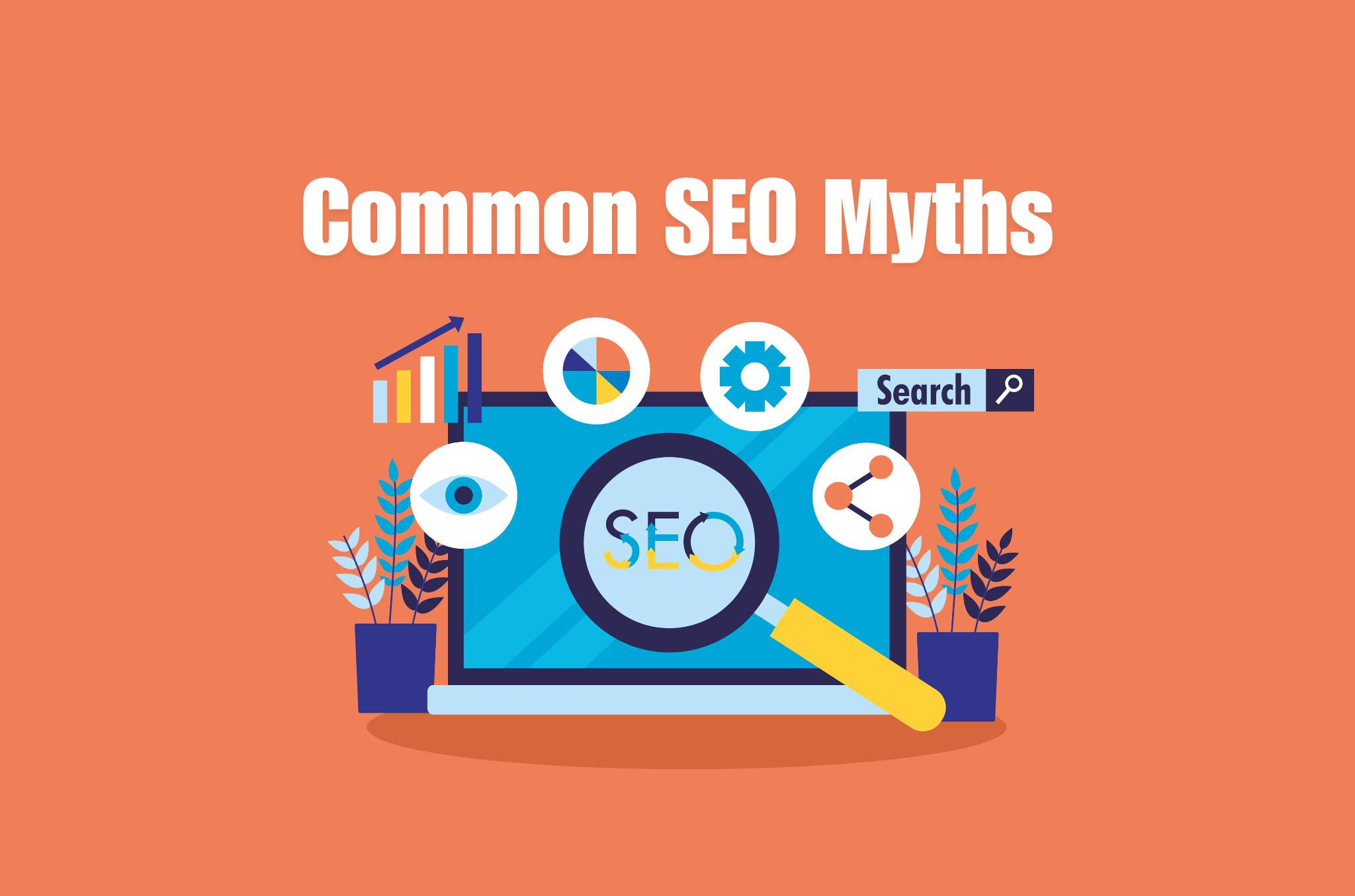
This blog discusses SEO practices that hurt your website’s growth, so you can change your strategy and start implementing what actually works today.
Myth #1: SEO Is a One-Time Task
Search Engine Optimization is an ongoing process, and if you believe otherwise, it is your first mistake. SEO isn’t something you finish. Many businesses optimize their site once, publish content, and expect rankings to hold indefinitely.
The reality is that SEO is ongoing, and experts should revise their strategies as the algorithms evolve, competitors publish new content, and user behavior changes. Treating SEO as a one-time setup leads to stagnation and gradual ranking loss. SEO best practices 2026 focus on continuous optimization, monitoring, and improvement.
Myth #2: Keywords Matter More Than User Experience
Keywords are important, but obsessing over them is the most common mistake. Users don’t care whether you have used as many keywords as possible; if their experience isn’t good, none of it matters.
Stuffing keywords into content, headings, or footers creates a poor reading experience and signals low quality to search engines. Google now prioritizes pages that genuinely answer user intent, load quickly, and are easy to navigate.
SEO today is as much about people as it is about algorithms.
Myth #3: More Pages Automatically Mean Better Rankings
Some businesses believe that the more pages they publish, the better their rankings will be. It is a popular myth that many businesses still practice.
But it is outdated, and you should focus on content quality; low-quality or duplicate pages only dilute your site’s authority. Google prefers fewer, stronger pages that demonstrate expertise and relevance.
It’s quality over quantity.
Myth #4: Backlinks Are All That Matter
Backlinks are a very important aspect of SEO best practices, but believing they are all that matter is another misleading myth. They aren’t the only ranking factor. Even if you have very strong backlinks, but your website’s performance is poor, it’s not going to work.
Here are the other points that matter a lot:
- Technical structure
- Content quality
- User engagement
- Authority signals
- Trust and security
Ignoring any of these can limit the website’s growth.
Myth #5: SEO Is Just About Ranking on Google
Businesses believe in a very popular myth that ranking is the most important part of SEO.
What do you expect from a website? If it is an e-commerce website, you want more sales or purchases. If it is a media website, you want more subscriptions. If it is a service website, you want more calls.
In short, you want conversions. Instead, businesses believe that rankings are everything. If your website is ranking well but the conversion rate is low, you must revise your strategy, because ranking is meaningless if it doesn’t lead to conversions.
Your website should meet your business goals. If your traffic isn’t converting, SEO isn’t doing its job. Modern SEO best practices 2026 emphasize conversion optimization, analytics, and intent-driven content.
Myth #6: Old SEO Tricks Still Work
Techniques like keyword stuffing, exact-match anchor text abuse, spammy directories, and invisible text once worked, but today they hurt more than help.
These outdated SEO practices can trigger algorithmic penalties or cause search engines to ignore your content entirely. Worse, they erode user trust.
Google considers these tactics manipulative and has accounted for them.
Myth #7: Small Businesses Don’t Need Advanced SEO
Another persistent myth is that advanced SEO strategies are only for large enterprises. The size of a business doesn’t determine its need for SEO. Every business needs it to level the field.
Local SEO, content authority, technical optimization, and analytics-driven improvements allow smaller brands to compete effectively, even against bigger budgets.
Ignoring SEO because your business is “too small” is one of the costliest common SEO mistakes.
Myth #8: SEO Results Should Be Instant
Businesses often believe that SEO should yield faster results like PPC, which is another myth, because SEO is not paid advertising. The results aren’t immediate. Many businesses abandon strategies when they don’t see results within a month and jump from one to another without giving them time to mature.
If you want real SEO growth, it takes:
- Takes consistency
- Builds authority over time
- Compounds results
Quick results aren’t rare, but you must focus on sustainable growth that requires patience and proper execution.
SEO Best Practices for 2026 and Beyond
Instead of chasing myths, here’s what modern SEO actually rewards:
- High-quality, experience-driven content
- Strong technical foundations
- Fast, mobile-friendly websites
- Clear trust signals and transparency
- Data-backed optimization using analytics
- Alignment with real user intent
SEO focuses on making a website what it should be and whether it deserves to rank.
Conclusion
Believing in these myths can cause severe setbacks for your website. The businesses that win online are the ones willing to adapt, learn, and invest in strategies that reflect how search engines and users actually behave today.
At Viewpoint Innovations, we help businesses replace myths with measurable strategies backed by analytics, real-world experience, and future-focused SEO thinking.
If your website isn’t ranking, SEO might not be the problem; lack of consistency might be.
For consistent SEO results, contact us today!
Frequently Asked Questions (FAQs)
1. What are the most common SEO myths today?
Some of the most common SEO myths include believing SEO is a one-time task, focusing only on keywords, relying solely on backlinks, and expecting instant results. These outdated ideas can limit website growth.
2. Does SEO still work in 2026?
Yes, SEO absolutely works in 2026, but the approach has evolved. Modern SEO focuses on user intent, content quality, technical performance, trust signals, and continuous optimization.
3. Are keywords still important for SEO?
Keywords are important, but they are not more important than user experience. Search engines now prioritize helpful content that satisfies user intent rather than keyword-heavy pages.
4. Do backlinks guarantee higher rankings?
No. Backlinks help, but they are only one ranking factor. Website speed, content quality, technical SEO, and user engagement also play a critical role in ranking success.
5. How long does it take to see SEO results?
SEO results typically take several months to show meaningful improvements. Sustainable SEO growth requires consistency, patience, and ongoing optimization.
6. Is SEO only about ranking on Google?
No. SEO is about driving relevant traffic that converts. Rankings without conversions do not contribute to real business growth.
Find more from ViewPoint in Google Search
Enjoyed this guide? Add ViewPoint Innovations as a preferred source to help you find our articles in Google Search.
Or open Google source preferences